
B12 and Iron Deficiency: Why You're Still Tired After Taking Iron
📑 Table of Contents
- Why Do Women Run Low on Both B12 and Iron?
- How Do Iron, B12, and Folate Build Red Blood Cells Together?
- Why Do Standard Blood Tests Miss Dual B12 and Iron Deficiency?
- What Does B12 and Iron Deficiency Look Like Together?
- Does the Form of B12 in Your Supplement Actually Matter?
- How Should You Test for Both B12 and Iron Deficiency?
- Frequently Asked Questions About B12 and Iron Deficiency
- Conclusion
You did everything right. Took your iron. Ate the red meat. Paired it with vitamin C. But three months later, you're still dragging yourself through every single day.
In a study of 75 cobalamin-deficient patients, 49.3% had an iron deficiency that was completely invisible until B12 treatment unmasked it. Their bodies were hiding the true depth of the problem.
This article explains why B12 and iron deficiency travel together, how they hide from routine blood panels, and what actually works to restore your energy.
Why Do Women Run Low on Both B12 and Iron?
B12 and iron share five root causes in women: plant-based diets, heavy periods, gut malabsorption conditions, declining stomach acid after 40, and medications like PPIs and metformin.
These two nutritional shortfalls aren't a coincidence. They arrive together because the same biological vulnerabilities deplete both.
Plant-based diets remove critical sources of both nutrients. Nearly 70% of vegetarian women face compromised iron stores. B12 is absent from plant foods entirely — the body can't synthesize it from vegetables, grains, or legumes. Women eating a strict vegan or vegetarian diet face guaranteed B12 depletion without supplementation. Treating the resulting iron deficiency without addressing missing B12 creates a bottleneck. You can read more on iron deficiency for vegetarians.
Heavy menstrual periods accelerate the loss. Monthly blood loss depletes both iron and B12 stored within red blood cells. A single heavy cycle can wipe out an entire month of dietary intake. The body struggles to replace both nutrients fast enough.
Malabsorption conditions block nutrient uptake at the source. Celiac disease, Crohn's, and SIBO damage the intestinal lining that absorbs both nutrients. B12 requires a special transport protein called intrinsic factor to survive the journey. Chronic gut inflammation can destroy the cells responsible for producing it.
Age 40 and beyond brings a natural decline in stomach acid. Both iron and B12 require adequate acid for proper molecular breakdown. Without it, these nutrients remain trapped inside food and pass through unabsorbed.
Medications can sabotage absorption. Proton pump inhibitors suppress the stomach acid needed for extracting both nutrients. Metformin alters calcium-dependent absorption in the terminal ileum. Millions of women take these medications daily without realizing the nutritional cost.
Sharing the same causes means these deficiencies arrive together. Understanding what they each do inside the body explains why fixing just one doesn't fix the fatigue.
How Do Iron, B12, and Folate Build Red Blood Cells Together?
Iron provides hemoglobin for oxygen transport, B12 drives DNA replication for cell division, and folate supplies methyl groups for DNA synthesis. All three are required at the same time.

Think of your bone marrow as a red blood cell factory. This factory requires three raw materials to keep the assembly line running. Remove any one, and the production line stalls.
Iron: The Oxygen Cargo
Iron forms the core of the hemoglobin molecule. Without enough iron, newly formed red blood cells can't carry oxygen from your lungs to your muscles and organs. Your tissues slowly suffocate at a cellular level.
B12: The DNA Copy Machine
B12 drives the methionine synthase reaction that allows cells to divide correctly. Without it, red blood cells can't complete the division process. They grow too large, too clumsy, and never mature properly.
Folate: The Ink for the Copy Machine
Folate supplies the methyl groups needed for DNA synthesis. This is exactly why iron deficiency during pregnancy becomes dangerous when doctors focus on iron alone. The expanding blood volume of a pregnant woman drains folate reserves fast.
When two or three of these elements are missing, the body can't produce healthy red blood cells at all. The fatigue becomes crushing. You can keep taking iron, but if the B12 copy machine is broken, no functional oxygen carriers leave the factory.
The problem gets worse. When both deficiencies are present, they hide each other on standard blood tests.
Why Do Standard Blood Tests Miss Dual B12 and Iron Deficiency?
B12 deficiency creates oversized red blood cells while iron deficiency creates undersized ones. When both are present, cell size averages out to "normal" and standard blood counts miss both problems.
This diagnostic masking leaves thousands of women without answers. Standard blood panels rely on Mean Corpuscular Volume (MCV) — a metric that measures the average size of red blood cells.
B12 deficiency causes megaloblastic anemia. Developing blood cells fail to divide properly and become bloated and fragile. This pushes MCV artificially high.
Iron deficiency triggers the opposite reaction — microcytic anemia. Cells lack the structural iron to reach full size. They stay small and pale. This drags MCV artificially low.
When both conditions are present at once, the oversized cells and undersized cells average out. The lab report prints a "normal" MCV. Your doctor glances at it and tells you everything looks fine. The dual deficiency hides in plain sight.
A clinical study proves how dangerous this masking is. Researchers tracked 75 cobalamin-deficient patients. Only 9.3% showed detectable iron deficiency before B12 treatment began. After B12 therapy corrected the oversized cells, 49.3% suddenly revealed severe iron deficiency. The B12 shortage had been masking the iron shortage the entire time.
This is why requesting ferritin AND serum B12 specifically matters. A basic CBC won't catch it.
Even when both conditions are caught, the symptoms overlap so much that it's hard to know which deficiency is causing what.

What Does B12 and Iron Deficiency Look Like Together?
Iron deficiency and B12 deficiency share fatigue, brain fog, weakness, and pallor. B12 adds nerve symptoms like tingling and balance problems. Iron adds restless legs and ice cravings.
The combined lack of oxygen transport and failing nerve function creates a specific pattern of physical breakdown.
| Symptom | Iron Deficiency | B12 Deficiency | Both Together |
|---|---|---|---|
| Crushing fatigue | ✓ | ✓ | ✓✓ (compounded) |
| Brain fog | ✓ | ✓ | ✓✓ |
| Weakness | ✓ | ✓ | ✓✓ |
| Pallor | ✓ | ✓ | ✓✓ |
| Shortness of breath | ✓ | ✓ | ✓✓ |
| Tingling/numbness (hands, feet) | — | ✓ | ✓ |
| Balance problems | — | ✓ | ✓ |
| Swollen tongue (glossitis) | — | ✓ | ✓ |
| Restless legs | ✓ | — | ✓ |
| Ice/pica cravings | ✓ | — | ✓ |
| Spoon-shaped nails | ✓ | — | ✓ |
Notice how the core symptoms compound. When you experience iron deficiency fatigue alongside B12 depletion, the exhaustion multiplies. Your brain lacks both oxygen delivery and the neurological myelin support B12 provides. That creates an unshakeable brain fog that a full night of sleep can't fix.
The isolated symptoms help identify which tank is running empty. Tingling in the hands and feet points to nerve damage from low B12. Chewing ice or experiencing restless legs at night points to empty iron stores.
If you're supplementing for one but ignoring the other, the shared symptoms won't fully resolve. And even if your supplement includes B12 on the label, the form of that B12 matters more than its presence.
Does the Form of B12 in Your Supplement Actually Matter?
Yes. Nearly half of women carry an MTHFR gene variant that makes synthetic B12 (cyanocobalamin) and folic acid difficult to convert into usable forms. Methylcobalamin and methylfolate bypass this problem entirely.

Between 40% and 49% of women carry at least one MTHFR C677T genetic variation. Think of it this way: nearly half of women have a genetic trait that makes cheap synthetic B vitamins harder to use. These women can't efficiently convert folic acid into usable folate, or cyanocobalamin into usable B12. Their bodies lack the enzymes to make the conversion happen.
Most iron supplements that include B12 use cyanocobalamin and folic acid — the cheapest forms available. For nearly half of women, these forms don't deliver results. Knowing which iron supplement ingredients to avoid protects you from wasting money on supplements your body can't process.
Check Your Label
Turn your current supplement bottle around. Does the ingredient panel list "cyanocobalamin" or "methylcobalamin"? Does it show "folic acid" or "methylfolate"?
| Synthetic Forms | Bioactive Forms | |
|---|---|---|
| B12 | Cyanocobalamin (requires conversion) | Methylcobalamin (ready to use) |
| Folate | Folic acid (requires MTHFR conversion) | Methylfolate (bypasses MTHFR) |
| Works for MTHFR carriers? | Poorly — 40-49% of women struggle | Yes — no conversion needed |
| Common in supplements? | Very common (cheapest option) | Less common (higher cost) |
Ferrous sulfate is a synthetic, synthetic form of iron that the body absorbs at a rate of only 3-5%. The remaining unabsorbed metal sits in the gut, causing constipation, cramping, and inflammation.
Iron Repair PLUS was formulated with methylcobalamin and methylfolate — the bioactive forms that bypass the MTHFR roadblock. The formula delivers natural animal-sourced iron alongside B vitamin forms your body can use right away. It offers a naturally high absorption rate and is gentle on the gut.
For women who already take high-quality B12 and folate separately, Iron Repair SIMPLY provides just the iron. It delivers the same natural animal-sourced iron, concentrated from bovine spleen, without the added B vitamins. Iron Repair doesn't require vitamin C for absorption and can be taken any time of day, with meals. A monthly supply of natural animal-sourced iron typically ranges from $30 to $90.
Knowing which forms matter is half the picture. The other half is getting the right tests.
How Should You Test for Both B12 and Iron Deficiency?
Request serum ferritin AND serum B12 at your next blood draw. Optimal ferritin is 100-125 ng/mL. B12 below 400 pg/mL may be symptomatic even within "normal" lab range.
Many doctors automatically run a basic complete blood count and stop there. You may need to ask specifically for these tests.
What to Request
Ask for a serum ferritin test — not just hemoglobin. Ferritin measures the iron stored in your tissues. Pair it with a serum B12 test (or methylmalonic acid for greater accuracy). Checking your ferritin levels alongside B12 prevents the masking effect from hiding your true status.
Understanding Your Results
Standard lab reference ranges are broad and often misleading.
- Ferritin: Lab "normal" spans 5-250 ng/mL. Optimal function requires 100-125 ng/mL. Below 30 ng/mL = absolute iron deficiency, regardless of what the report says.
- B12: Lab "normal" often starts at 200 pg/mL. Many functional medicine practitioners consider below 400 pg/mL as potentially symptomatic. You can feel terrible while your doctor circles "normal."
What to Do With Your Results
- Both low: Consider a supplement addressing the full trio — natural animal-sourced iron + methylcobalamin + methylfolate.
- Iron low, B12 adequate: Iron Repair SIMPLY (iron only) may be the right fit.
- Dietary support: Liver, red meat, shellfish, and eggs provide both iron and B12. Leafy greens and legumes offer additional iron.
- Severe B12 deficiency (below 200 pg/mL) or pernicious anemia: Consult your physician about B12 injections.
Why I Created Iron Repair PLUS
I created Iron Repair PLUS because I lived this problem. After my postpartum hemorrhage, I spent years battling iron deficiency. It wasn't until I requested B12 and vitamin D testing for my daughter that we finally saw the full picture. Her doctors wouldn't have run those tests without me asking. Iron Repair PLUS addresses the iron, B12, and folate trio because that's what the science — and my family's experience — demanded.

Frequently Asked Questions About B12 and Iron Deficiency
These are the most common questions women ask about B12 and iron deficiency together. Each answer draws from the research and clinical guidance covered above.
Q: Can you take B12 and iron at the same time?
A: Yes. B12 and iron don't compete for absorption and can be taken together safely. Iron Repair PLUS combines both in a single capsule.
Q: What is the difference between B12 deficiency and iron deficiency?
A: Iron deficiency reduces oxygen transport by creating small, pale red blood cells. B12 deficiency impairs cell division by creating large, immature red blood cells. Both cause fatigue, but B12 also affects nerve function — causing tingling, numbness, and balance issues that iron deficiency doesn't.
Q: Can B12 deficiency cause iron deficiency?
A: B12 deficiency can mask iron deficiency by suppressing iron utilization. In one study, 49.3% of B12-deficient patients had hidden iron deficiency that only became visible after B12 treatment.
Q: Why am I still tired after taking iron?
A: Undiagnosed B12 or folate deficiency may be present alongside iron deficiency. Iron alone can't build healthy red blood cells without B12 and folate working alongside it. If you're experiencing persistent iron deficiency fatigue, ask your doctor to check B12 levels.
Q: Do vegetarians need both B12 and iron supplements?
A: Yes. Plant-based diets are low in bioavailable iron and contain zero B12. Vegetarian women face high risk for dual deficiency and should supplement both nutrients consistently.
Conclusion
- B12 and iron deficiency aren't separate problems — they share the same root causes
- They mask each other on routine blood tests
- Fixing one while ignoring the other leaves half the problem untreated
- Your body needs all three raw materials — iron, B12, and folate — to rebuild healthy red blood cells
- At your next blood draw, request both ferritin and B12 panels. Don't settle for a basic CBC.
- Take a moment to check your current supplement label for cyanocobalamin versus methylcobalamin.
- Iron Repair PLUS delivers natural animal-sourced iron, concentrated from bovine spleen, combined with methylcobalamin B12 and methylfolate — the bioactive forms nearly half of women need. For women who already take B12 separately, Iron Repair SIMPLY provides just the iron. Stop guessing about the root cause of your fatigue and start giving your body what it actually needs.
Get a Personalized Dose for Your Specific Deficiency
Dual deficiencies are complex — your iron intake needs to be precise, not generic. Use our ASH weight-based calculator to get a personalized recommendation dialed in for your body so you can stop guessing and start recovering.
Calculate My Intake →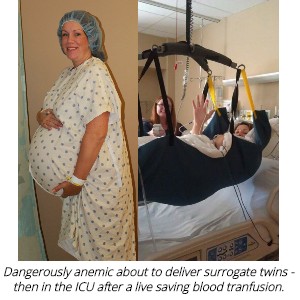
Written by Krystal Moore
Founder & Iron Warrior
Krystal Moore is the founder of Three Arrows Nutra. After a life-threatening postpartum hemorrhage and years of failed iron treatments, she spent hundreds of hours researching iron absorption science and created Iron Repair to help women fight back against iron deficiency.